Wooden Decking Inspection After Removing Underlayment During a Re-Roof
Why do Roof Decking Inspection Matter?
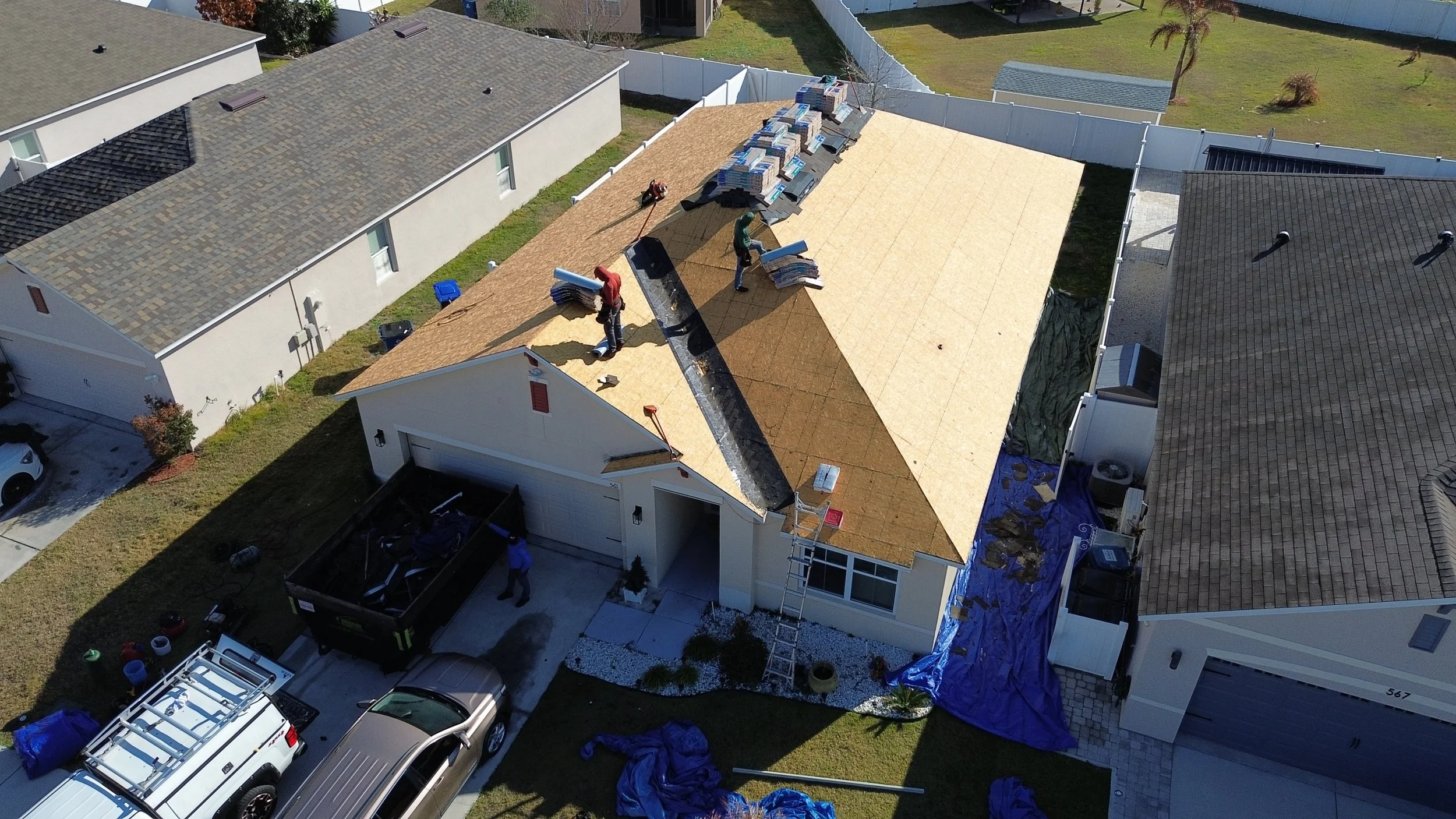
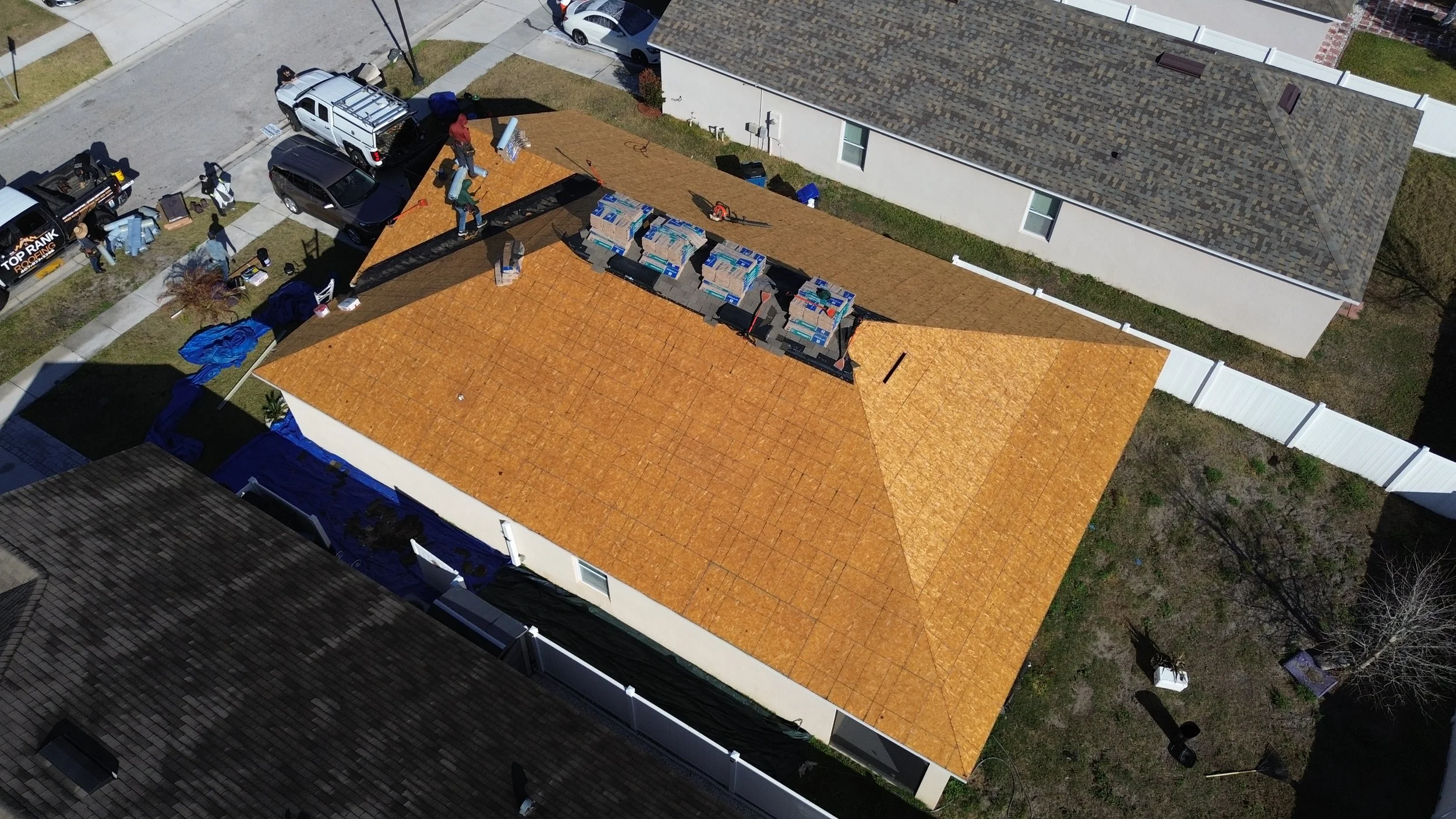
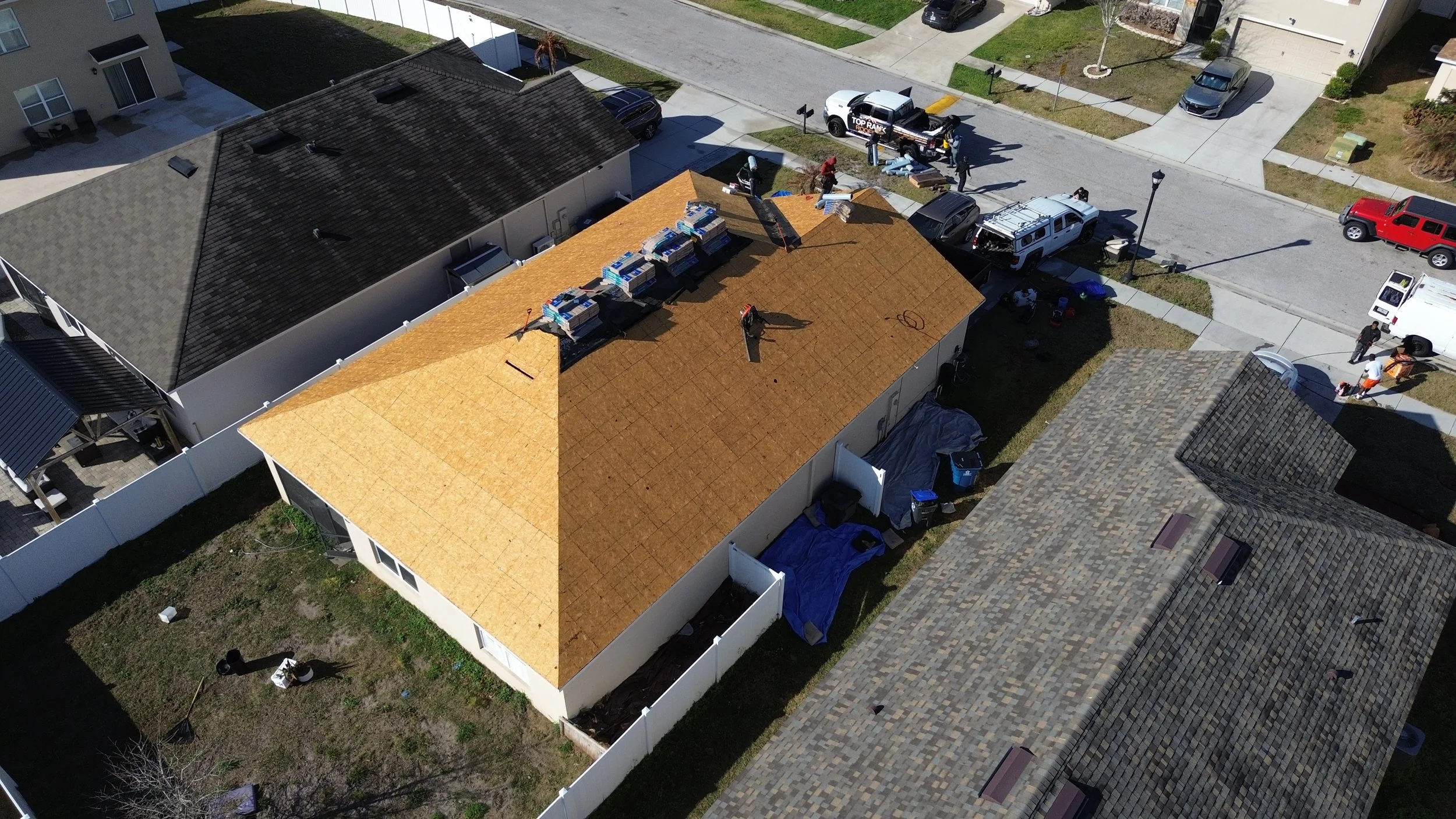
When replacing a roof, one of the most critical — and often overlooked — steps is inspecting the wooden roof decking after all underlayment has been removed. Once the shingles and felt or synthetic underlayment are stripped away, the exposed decking reveals the true structural condition of your roof.
📞 Call us today to schedule your FREE drone inspection: 407-922-3296 🌐 FREE ROOFING ESTIMATE - toprankfreequote.com
For property owners in Florida, where humidity, hurricanes, and heavy rains are common, a thorough decking inspection is essential to ensure the new roofing system performs properly and meets current building codes in Kissimmee, Orlando and Central Florida.
At Top Rank Builder and Roofing LLC, we perform complete tear-offs down to the deck to ensure every new roof installation starts with a solid foundation
Roof decking (also called roof sheathing) is the structural base attached to rafters or trusses. It supports your underlayment and shingles. If compromised, even the highest-quality roofing materials will fail prematurely.
Key Reasons to Inspect Decking During a Re-Roof:
Detect hidden water damage
Identify wood rot and mold growth
Check for soft spots or sagging areas
Ensure compliance with updated Florida building codes
Prevent future roof leaks
Improve hurricane resistance
Skipping this step can result in costly repairs shortly after your new roof is installed.
What Happens After Underlayment Is Removed?
During a full roof replacement and tear-off, all existing materials are removed down to the bare wood deck. This process allows contractors to:
Examine the entire roof surface.
Identify damaged or weakened panels.
Replace compromised plywood or OSB sections.
Re-secure loose decking to framing members.
Ensure proper fastening patterns for high-wind zones.
A professional roofing company will never install new underlayment over damaged decking.
Signs of Damaged Roof Decking
Here are the most common problems discovered during decking inspections:
1. Wood Rot
Prolonged water intrusion weakens plywood and causes deterioration. Rot compromises structural integrity and must be removed.
2. Soft or Spongy Areas
If the decking feels soft underfoot, it may indicate internal decay.
3. Delamination
Layers of plywood or OSB separating due to moisture exposure.
4. Mold or Mildew
Common in humid climates, mold signals ongoing moisture problems.
5. Improper Nailing Patterns
Older roofs may not meet modern hurricane fastening requirements.
Florida Building Code Requirements
In Florida, roof replacements must comply with strict wind mitigation and fastening standards. Proper decking inspection ensures:
Correct nail spacing (especially in high-velocity hurricane zones)
Minimum decking thickness requirements
Secure attachment to trusses/rafters
Structural compliance before new underlayment installation
A licensed contractor with dual building and roofing credentials understands both structural and roofing code requirements
The Decking Replacement Process
If damaged decking is found, here’s what typically happens:
Removal of compromised panels
Inspection of underlying framing
Installation of new code-compliant plywood or OSB
Re-nailing to meet wind uplift standards
Inspection approval (if required)
Installation of new underlayment
This process ensures your new roof system starts on a structurally sound base.
Benefits of Proper Decking Inspection During Re-Roof
✔ Extends the lifespan of your new roof
✔ Prevents future leaks and interior damage
✔ Improves hurricane resistance
✔ Increases property value
✔ Reduces insurance claim risks
✔ Ensures code compliance
For homeowners and commercial property owners, this step protects your investment long-term.
Residential and Commercial Roofing Expertise
Top Rank Builder and Roofing LLC specializes in:
Full roof tear-offs and replacements
Structural repairs and code compliance updates
Storm damage assessments and restoration
Preventative maintenance inspections
Their commitment to safety, compliance, and quality workmanship ensures every roof is built to withstand Florida’s demanding weather conditions.
Final Thoughts: Never Skip the Deck Inspection
A re-roof is more than just new shingles — it’s an opportunity to evaluate and strengthen the structural integrity of your home or commercial building.
Removing all underlayment exposes the truth about your roof’s condition. Taking the time to inspect and repair wooden decking ensures your new roofing system performs at its best for decades to come.
If you’re planning a roof replacement, make sure your contractor includes a full decking inspection as part of the tear-off process. It’s one of the most important steps in protecting your property investment.